Lyda Hill Philanthropies’ IF/THEN® Initiative Presents #IfThenSheCan – The Exhibit: Game Changers, Showcasing Contemporary STEM Innovators in Sports
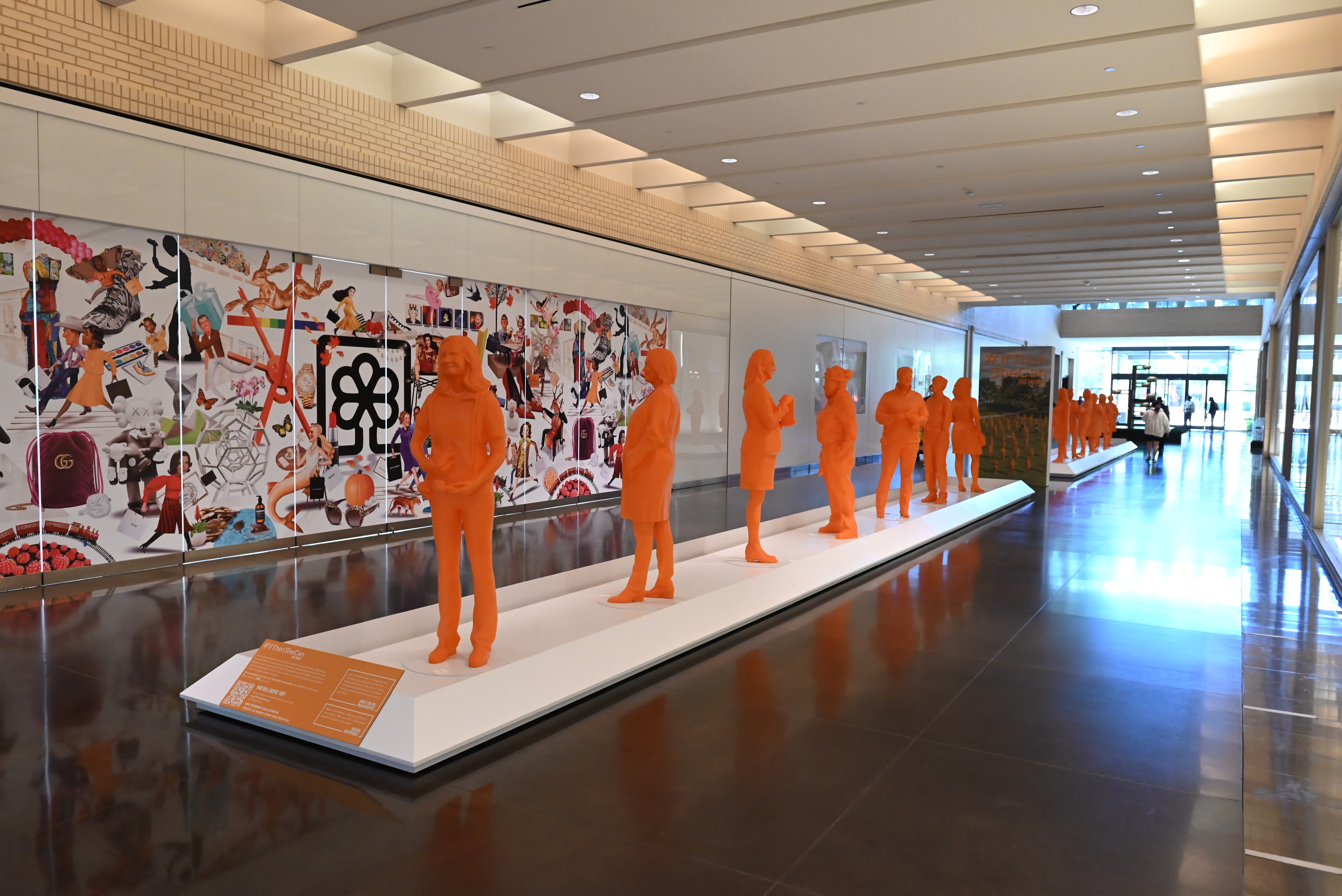
For the first time, during the 2026 FIFA World Cup Fan Festival™ at Fair Park in Dallas, Lyda Hill Philanthropies’ IF/THEN® Initiative will debut #IfThenSheCan – The Exhibit: Game Changers, a monumental display of 26 life-size, 3-D printed statues celebrating leaders whose work demonstrates how science, technology, engineering, and math (STEM) fuel the world of sports.
In collaboration with the North Texas FWC Organizing Committee, the interactive exhibit will be on public display from Thursday, June 11, through Sunday, July 19, at the Fan Festival at Dallas’ Fair Park, located at 3809 Grand Avenue. Coinciding with the full World Cup tournament, fans can enjoy free live match screenings, food, music, and entertainment. Entry to the Fan Festival and the exhibit is free.
The Game Changers include sports professionals like Julie Foudy and Lucy Li, along with Cynt Marshall, Dr. Colleen M. Hacker, and others whose work spans fields ranging from elite athletic performance and sports medicine to data analytics, stadium engineering, biomechanics, and fan technology. The installation shines a light on the STEM careers that shape and power today’s global sports industry.
“The World Cup is one of the most watched sporting events on the planet, making it a powerful moment to showcase the STEM behind the sports we love,” said Nicole Small, CEO of Lyda Hill Philanthropies, LH Capital, Inc. and Co-Founder of IF/THEN®. “This exhibit highlights the innovators transforming sports and helps the next generation see how science and technology open doors on and off the field.”
Each statue includes a QR code that unlocks videos and images that bring these women’s journeys to life. Through these stories and videos in the IF/THEN® Collection, audiences can explore how technology improves performance, how biomedical science primes athletes for the field, how data informs sports strategy on and off the field, and how engineering and innovation elevate the game for athletes and fans alike.
The lime green statues, made of a UV-cured acrylic gel, will be 3D printed in Dallas, TX. Each statue is a life-sized depiction of a Game Changer, complete with tools that reflect her work from soccer balls, to surf boards, ski helmets, microscopes, and drawing boards.
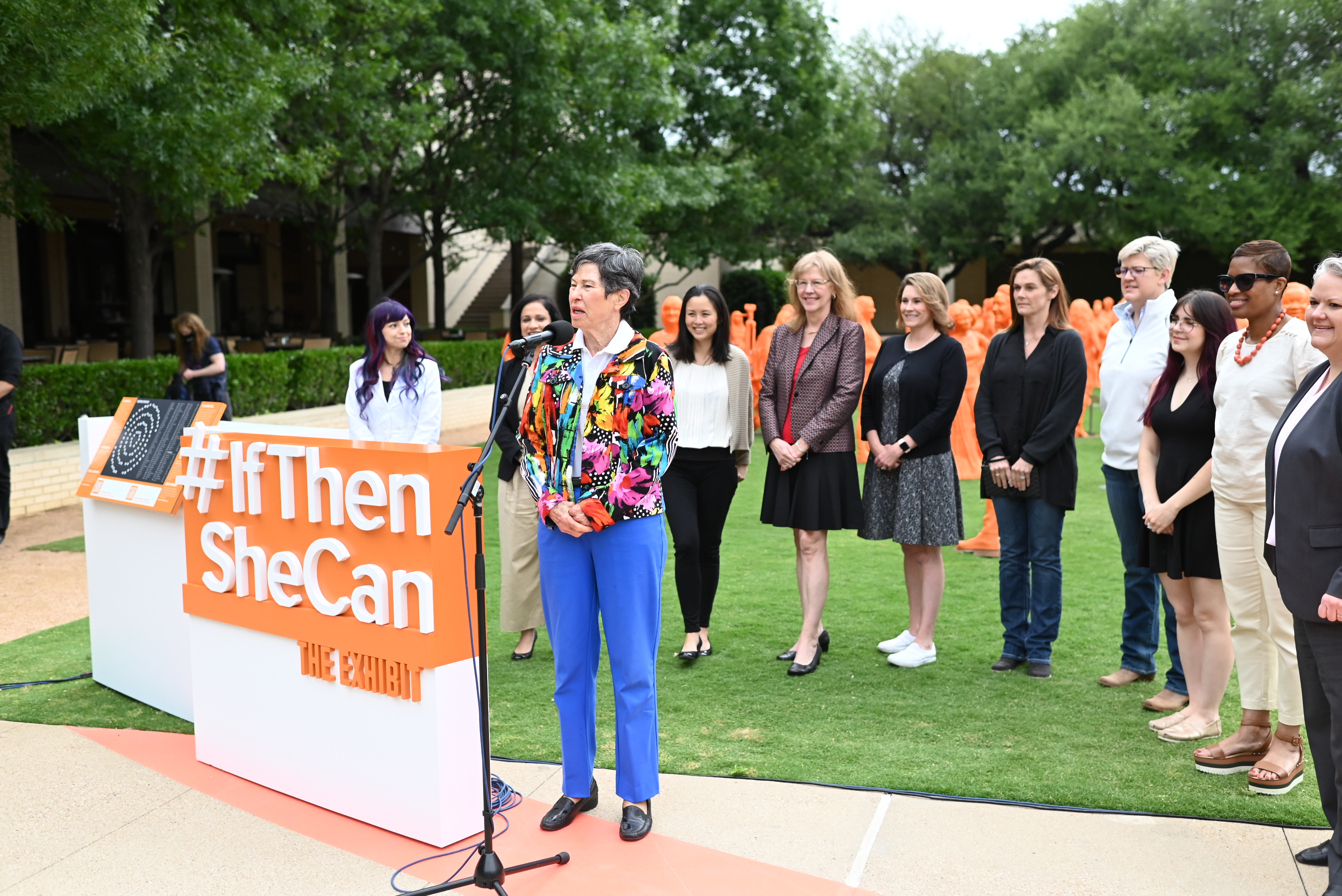
#IfThenSheCan – The Exhibit: Game Changers marks the second IF/THEN® statue exhibit, following the historic debut of #IfThenSheCan – The Exhibit, which featured 120 statues of contemporary women in STEM. That first exhibit made history as the largest assembly of statues of real women ever displayed at one time, inspired by a study that found the ten largest U.S. cities displayed fewer than a half-dozen statues of real women in publicly accessible places. It was shown at ten pop-up installations, including the Central Park Zoo, Cambridge, Massachusetts’ Kendall Square, Dallas Love Field Airport, Dallas’ NorthPark Center, and the Smithsonian Institution in Washington, DC, reaching more than five million visitors since 2021.
The IF/THEN® Initiative was launched in 2019 to empower current STEM innovators and inspire the next generation of pioneers by elevating women in STEM as role models. While rooted in the same mission of visibility and inspiration, #IfThenSheCan – The Exhibit: Game Changers expands the initiative’s reach into sports, one of the world’s most influential cultural platforms, during the largest sporting event on the planet.
“It is an honor to display these incredible statues of influential women who have achieved remarkable accomplishments in sports during FIFA Fan Festival Dallas,” said Monica Paul, President of the North Texas FWC Organizing Committee. “Dallas and the North Texas region will be on full display during the FIFA World Cup 2026, and FIFA Fan Festival Dallas will be a perfect place for guests to enjoy the matches while also observing and learning about the great achievements of these inspirational women in sports.”
“When we invest in STEM talent, we invest in solutions for our future,” said Lyda Hill, founder of Lyda Hill Philanthropies. “We hope these statues spark inspiration, conversation, and lasting impact on the next generation long after the final match. If they can see it, then they can be it!”
The exhibit is free and open to the public throughout the World Cup Fan Festival. More information, including the complete list of Game Changers, will be published at ifthenshecan.org.The full IF/THEN® Collection may be viewed at ifthencollection.org.
The ExhibitLydia Hill at North Park Center Debut 2021
Lyda Hill Philanthropies (LHP) has awarded a gift to Dallas Independent School District (Dallas ISD), through the Dallas Education Foundation, to support the launch of Learning Voyages, a new districtwide passport program designed to expand access to high-quality, off-campus learning experiences for students across the district. Learning Voyages connects classroom instruction to real-world learning through immersive, curriculum-aligned field experiences.
Launched as a pilot program in spring 2026, Learning Voyages will initially focus on science, technology, engineering, and math (STEM) learning opportunities at Dallas’ leading science and nature institutions. Through the pilot, more than 48,000 students in select grade levels will participate in an off-campus learning experience aligned with their curriculum. All students in participating grades, including first, second, fourth, fifth and seventh grades, will visit one of the following institutions: Dallas Arboretum and Botanical Garden, Dallas Zoo, Environmental Education Center, or Perot Museum of Nature and Science.
“We value partners like the Lyda Hill Philanthropies, who provide high-quality experiences for our Dallas ISD students,” said Angie Gaylord, Dallas ISD’s chief of academics. “The curriculum-aligned learning experiences passport aims to spark a passion for STEM by allowing students to apply learning in real-life settings. Students will annually explore interactive exhibits and engage in activities designed to foster curiosity, creativity, and discovery at every grade level, inspiring the next generation of innovators.”
By underwriting transportation, admissions, and program coordination, the Lyda Hill Philanthropies supported pilot removes financial and logistical barriers that have historically limited access to large-scale off-campus experiences. The initiative is designed to test and strengthen districtwide systems for buses, scheduling, chaperones, and curriculum alignment, ensuring equitable access to meaningful off-campus learning for students across Dallas ISD.
For participating science and nature institutions, Learning Voyages creates a coordinated, scalable approach to serving students districtwide. Aligning visits to specific grade levels and curriculum goals allows partner organizations to serve more students, plan staffing more efficiently, and deliver programming that deeply reinforces classroom learning. The pilot also builds on existing STEM and environmental education programs at these institutions, many of which are supported by Lyda Hill Philanthropies.
“STEM learning is strengthened when students can connect classroom lessons to hands-on experiences at Dallas’s world-class science and nature institutions,” said Lyda Hill, Founder of Lyda Hill Philanthropies. “We applaud Dallas ISD’s commitment to expanding these STEM-rich opportunities out of the traditional classroom and are proud to help make this pilot possible.”
While the pilot is STEM-focused, Learning Voyages is envisioned as a long-term, districtwide framework for high-quality educational field experiences across multiple subject areas. Insights from the pilot will inform future expansion, with the potential to serve additional grade levels and incorporate new learning verticals over time.
The launch of Learning Voyages represents a systemwide shift for Dallas ISD and establishes coordinated, large-scale enrichment field experiences across the district for the first time in over a decade.
Learning Voyages advances Lyda Hill Philanthropies’ mission to inspire the next generation of scientists, engineers, and innovators through immersive STEM experiences that spark curiosity and lasting interest. Research shows that expanding access to high-quality STEM experiences can increase student engagement and motivation. Field Trip experiences have been proven to increase student interest in specific subjects, particularly for students with fewer enrichment opportunities.
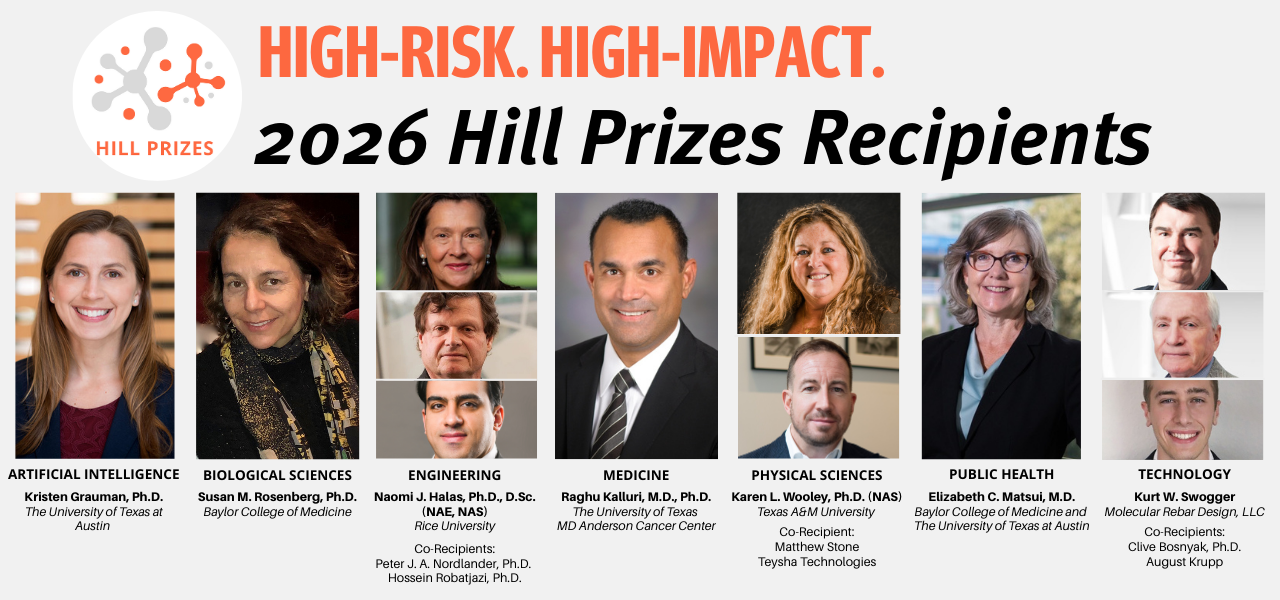
TAMEST (Texas Academy of Medicine, Engineering, Science and Technology) and Lyda Hill Philanthropies today announced the recipients of the 2026 Hill Prizes. The prizes, funded by Lyda Hill Philanthropies, propel high-risk, high-reward ideas and innovations that demonstrate significant potential for real-world impact and can lead to new, paradigm-shifting paths in research.
The prizes are given in seven categories: artificial intelligence, biological sciences, engineering, medicine, physical sciences, public health and technology. They recognize and advance top Texas innovators, providing seed funding to advance groundbreaking science and highlight Texas as a premier destination for world-class research.
This is the first year that the prizes will recognize seven recipients, with the addition of the new Prize in Artificial Intelligence, thanks to an additional commitment from Lyda Hill Philanthropies to expand and extend the Hill Prizes. In addition, Lyda Hill Philanthropies has committed to fund at least $1 million in discretionary research funding on an ad hoc basis for highly-ranked applicants not selected as recipients.
“It is with great pride that I congratulate this year’s Hill Prizes recipients. Their pioneering spirit and unwavering dedication to innovation are addressing some of the most pressing challenges of our time – from climate resilience and energy sustainability to medical breakthroughs and the future of artificial intelligence,” said Lyda Hill, Founder of Lyda Hill Philanthropies. “The work recognized today holds extraordinary promise to improve lives, and I am thrilled to see how this investment in high-risk, high-impact science will accelerate their progress toward real-world impact.”
The projects selected for the 2026 Hill Prizes focus on creative, collaborative approaches to some of the world’s biggest challenges, featuring top-tier, cross-disciplinary teams with leaders and researchers from multiple institutions. Principal Investigators of the winning proposals will be recognized the evening of February 2, 2026, at the opening reception of the TAMEST 2026 Annual Conference in San Antonio, Texas. Each prize recipient’s institution or organization will receive $500,000 in direct funding from Lyda Hill Philanthropies to accelerate their work.
The Principal Investigators and Co-Recipients of the winning proposals are:
Artificial Intelligence: Kristen Grauman, Ph.D., Professor, Department of Computer Science, The University of Texas at Austin
Dr. Grauman has been awarded the 2026 Hill Prize in Artificial Intelligence for pioneering research on video understanding models that help people acquire physical and procedural skills. Her work addresses the complex challenge of teaching AI to interpret human activity from first‑person video—a key step toward intelligent systems that can actively support people in everyday life. With the prize funding, Dr. Grauman and her interdisciplinary team will develop new methods for AI to perceive human movement, reason across time, and deliver personalized feedback. Their innovations will power AI coaching systems on smart glasses, assisting users in contexts such as physical therapy, sports training, and household repairs. This project lays the foundation for AI that goes beyond observation to instruction, offering a transformative approach to skill development and accessibility.
Co-PIs: Georgios Pavlakos, Ph.D., Assistant Professor, Department of Computer Science, The University of Texas at Austin; Amy Pavel, Ph.D., Assistant Professor, University of California, Berkeley; Hao-Yuan Hsiao, Ph.D., Associate Professor, Kinesiology & Health Education, The University of Texas at Austin; Travis Vlantes, Director, Applied Sports Science, The University of Texas at Austin
Biological Sciences: Susan M. Rosenberg, Ph.D., Ben F. Love Chair in Cancer Research and Professor of Molecular & Human Genetics, Biochemistry & Molecular Pharmacology, and Molecular Virology & Microbiology, Dan L Duncan Comprehensive Cancer Center, Baylor College of Medicine
Dr. Rosenberg’s proposal was chosen for the 2026 Hill Prize in Biological Sciences for her groundbreaking strategy to combat antibiotic resistance by targeting the evolutionary process itself. Antibiotic resistance is a global health crisis, causing millions of deaths and making once-routine infections life-threatening. Conventional strategies focus on developing new antibiotics, but bacteria evolve resistance faster than new drugs can be developed – leaving current approaches increasingly unsustainable. Dr. Rosenberg’s team is pursuing a novel solution: discovering drugs that inhibit the bacterial stress responses that drive mutation and survival during antibiotic treatment. These “evolution-slowing” drugs reduce the emergence of resistant strains and improve infection clearance. Early studies identified two promising compounds, including one already FDA-approved. Her team will utilize the prize funding to screen a 14,000-compound drug library to identify additional candidates, study their mechanisms and test their ability to boost antibiotic effectiveness in animal models. The long-term goal is to move successful candidates into clinical trials, beginning with veterans suffering from recurrent infections. This work has the potential to extend the utility of existing antibiotics and transform the way bacterial infections are treated worldwide.
Co-PI: Christophe Herman, Ph.D., Professor, Baylor College of Medicine
Engineering: Naomi J. Halas, Ph.D., D.Sc.(NAE, NAS), University Professor and Stanley C. Moore Professor of Electrical and Computer Engineering, Rice University
Co-Recipients: Peter J. A. Nordlander, Ph.D., Wiess Professor of Natural Sciences and Professor of Physics and Astronomy, Rice University; Hossein Robatjazi, Ph.D., Vice President of Research, Syzygy Plasmonics Inc.; Adjunct Professor of Chemistry, Rice University
Dr. Halas, Dr. Nordlander and Dr. Robatjazi’s proposal was selected for the 2026 Hill Prize in Engineering to advance light-driven technologies for sustainable ammonia synthesis. Ammonia is essential for global agriculture as fertilizer and is emerging as a promising hydrogen carrier and fuel for maritime and land transport. Today, its production relies on the fossil-fuel-intensive Haber–Bosch process, which consumes vast energy resources and generates significant greenhouse gas emissions. Building on their groundbreaking work in antenna-reactor photocatalysts — nanoscale systems that capture light and use photon energy to drive chemical reactions — the team will design and demonstrate highly specific catalysts and prototype photoreactors that enable ammonia synthesis under mild conditions, without external heating or emissions. This approach dramatically lowers activation barriers for industrial reactions, opening the door to decentralized, point-of-use applications with electrically switchable control not possible in conventional thermal processes. With support from the Hill Prize, the team will improve light-driven catalysts for converting nitrogen into ammonia, refine prototype reactors for practical deployment and partner with industry collaborators to advance larger-scale applications. By completing the nitrogen cycle with light‑based ammonia synthesis, this innovation has the potential to reduce greenhouse gas emissions and expand access to clean fertilizer and energy solutions worldwide — driving a more sustainable future.
Medicine: Raghu Kalluri, M.D., Ph.D., Professor, Department of Cancer Biology, The University of Texas MD Anderson Cancer Center
Dr. Kalluri was chosen for the 2026 Hill Prize in Medicine for developing eye drops to treat age-related macular degeneration (AMD) and other posterior eye diseases. AMD is the leading cause of vision loss globally, and current treatments rely on direct injection of anti-VEGF drugs into the eye. Dr. Kalluri engineered exosomes to treat AMD and formulated them as eye drops, demonstrating their ability to fully penetrate the eye and reach the retina. This non-invasive delivery system is designed to replace standard intravitreal injections, which are costly and carry risks including infection and retinal damage. Dr. Kalluri and his team engineered the exosomes to carry VEGF-targeting siRNA (iEVVEGF), which was effectively delivered to the damaged retina, achieving vascular repair in preclinical models. The eye drop treatment showed equivalent or superior effectiveness to current FDA-approved therapies at a fraction of the dosage and cost. The team has also built a scalable, GMP-grade manufacturing pipeline for clinical translation. Dr. Kalluri will utilize prize funding to accelerate IND-enabling studies and support testing for additional ocular conditions. Dr. Kalluri’s innovation has the potential to disrupt standard ophthalmic care by providing a safe, affordable, and self-administered alternative to intraocular injections.
Physical Sciences: Karen L. Wooley, Ph.D. (NAS), W.T. Doherty-Welch Chair and Distinguished Professor of Chemistry, Texas A&M University
Co-Recipient: Matthew Stone, Managing Director, Teysha Technologies
Dr. Wooley and Mr. Stone’s proposal was chosen for the 2026 Hill Prize in Physical Sciences for innovative research that transforms agricultural waste into safe, degradable plastics and chemicals. Their work directly addresses the global challenge of replacing toxic, petroleum-derived materials – such as bisphenol A (BPA) – with sustainable alternatives. Dr. Wooley and her team have developed patent-pending chemistry that converts sugars and natural phenolic compounds into BPA analogs designed to safely degrade after use. These new materials match or exceed the performance of traditional plastics while eliminating long-term environmental and health risks. The team will use the prize funding to scale production, optimize chemical processes and purchase critical equipment to accelerate translation from lab to market. In collaboration with Teysha Technologies, founded by Mr. Stone, they aim to develop commercially viable alternatives to conventional plastics. The Hill Prize will accelerate the development of these next-generation polymers that are safer for people and the planet.
Co-PIs and Team Members: Senthil K. Boopathi, Associate Research Scientist, Department of Chemistry, Texas A&M University; Ashlee A. Jahnke, Ph.D., Research Scientist, Department of Chemistry, Texas A&M University; Co-Founder, Sugar Plastics, Director of R&D, Teysha Technologies
Public Health:Elizabeth C. Matsui, M.D., Professor of Pediatrics and the Director of Environmental Health in the Center for Human Immunology, Baylor College of Medicine; Professor of Population Health and Pediatrics, Dell Medical School; Director, Center for Health and Environment: Education and Research, The University of Texas at Austin
Dr. Matsui’s proposal was chosen for the 2026 Hill Prize in Public Health for identifying climate change-related environmental exposures – specifically extreme heat and air pollution – as key contributors to adverse maternal and birth outcomes and associated disparities. The U.S. continues to see rising rates of preterm birth, infant mortality and pregnancy complications, with Texas experiencing particularly sharp increases. Despite this public health crisis, there are currently no effective primary prevention strategies. Dr. Matsui and her multidisciplinary team will use the prize funding to generate high-resolution, actionable data that links the timing and types of heat and air pollution exposure to specific maternal and infant health risks. Her team has already secured statewide birth data and will combine it with fine-scale environmental data to uncover how these exposures contribute to racial, ethnic and socioeconomic disparities. The outcome aims to establish a foundation for testing prevention strategies – ranging from individual-level interventions to policy changes – that could significantly reduce poor pregnancy outcomes and close health equity gaps.
Co-PIs and Team Members: Alison Cahill, M.D., Professor of Women’s Health, The University of Texas at Austin; Sarah Chambliss, Ph.D., Instructor, The University of Texas at Austin; Catherine Cubbin, Ph.D., Professor, School of Social Work, The University of Texas at Austin; Roger D. Peng, Ph.D., Professor of Statistics and Data Science, The University of Texas at Austin; Geeta Persad, Ph.D., Assistant Professor of Climate Science, The University of Texas at Austin
Technology: Kurt W. Swogger, Chief Executive Officer and Co-Founder, Molecular Rebar Design, LLC
Mr. Swogger, Dr. Bosnyak and Mr. Krupp’s proposal was chosen for the 2026 Hill Prize in Technology for addressing critical environmental and safety concerns related to tire performance and chemical toxicity. A key ingredient in nearly all tires – 6PPD – has been linked to aquatic toxicity and potential human health risks, yet it remains essential for preventing ozone-related cracking in rubber compounds. Mr. Swogger and his team will use the prize funding to advance the development and commercialization of MOLECULAR REBAR® (MR), a patented carbon nanotube technology that replaces 6PPD without compromising tire durability or safety. Working with leading industry partners, the team will formulate and test full-size prototype tires using this safer alternative. The new compounds will maintain crack resistance, improve performance and significantly reduce the environmental impact of tire wear. Additionally, the team will use these new compounds during tire trials to validate previous findings that the use of MR reduces the most breathable and hazardous particles (PM2.5, PM10) generated during tire wear- improving the safety profile of tire wear particles. This breakthrough paves the way for a new generation of eco-conscious, high-performance tires, addressing both regulatory pressure and sustainability goals across the global tire industry.
“On behalf of TAMEST, we are honored to celebrate the 2026 Hill Prizes recipients. These outstanding innovators exemplify the excellence and ambition of Texas science and research,” said TAMEST President Ganesh Thakur, Ph.D. (NAE), University of Houston. “Thanks to the visionary support of Lyda Hill Philanthropies, the Hill Prizes not only recognize transformative work but provide the resources to move bold ideas from the lab to life-changing solutions. We are proud to support their journeys and spotlight Texas as a global hub for scientific leadership.”
“The Hill Prizes are designed to catalyze extraordinary ideas that, with support from the Prize, have the potential to change the world,” said 2026 Hill Prizes Committee Chair David E. Daniel, Ph.D. (NAE), The University of Texas at Dallas. “This year’s recipients are advancing ideas that stretch the boundaries of their fields and offer powerful possibilities for the future. It has been a privilege to serve on the committee and help select such a compelling group of visionaries.”
Each recipient will submit an annual impact report to TAMEST and Lyda Hill Philanthropies to showcase their progress and highlight how the prize has accelerated their research.
Applications for the 2027 Hill Prizes will open May 1, 2026, and close June 1, 2026.
Visit www.tamest.org/hill-prizes for more information on the prizes, application and selection process. TAMEST thanks the Hill Prizes Committee for their work selecting the 2026 recipients. Learn more about the committee members here.